Showing posts with label counterfeit. Show all posts

Tuesday, 18 June 2013

Anti Counterfeit IC Testing : Visual Inspection

As part of the Retronix Anti-Counterfeit IC testing service a customer approached us asking for our level 1 authenticity test, specifically the visual inspection service.

The customer send us approximately 3000 qty - NUD4700 type parts and asked to pick a random sample of 11 for visual inspection to check for authenticity. The reel information and datecodes given were the following: 
Retronix - Authenticity tests
IC Testing services


    Where :
  
    M = Date Code
    MNH = Device Code
    . = Pb-Free Package


Anti-Counterfeit IC Tests

The first check straight away points out certain discrepancies.  Markings do not match the information on the datasheet, and the direction of the text with reference to the Anode was found to be incorrect, further inspection about the device itself revealed the following:
Component Testing services Retronix

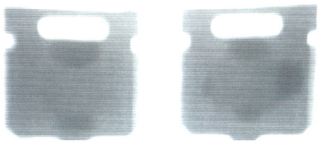
As it can be seen from the datasheet image and from the image that is sourced from Mouser Electronics, the bottom side of the device should be connected to the Cathode and continue onto the entire bottom side. But as can be seen with the image of the device on the right that these devices have two isolated pins with the bottom side being the outer casing and not a contact, this shows us that the device in question is not as per standard and is considered suspect.

Continuing investigation of the device for further inspection shows:

Retronix Ltd. IC Tests

Retronix Ltd. Component Testing
1                                              2        

Device contacts are found to be incorrect, Anode and Cathode are formed into a gull wing as can be seen in 'Image 2' and not as they originally should have been as shown in 'Image 1'

Conclusion :

The visual inspection of the sample puts the batch as suspect and cannot be termed original as per standard datasheet and information available about the device. The report along with all photographic evidence and technical information was provided as a report to the customer as suspect counterfeit. This gives the customer a good insight into future purchases from the buyer and also this current purchase which could have caused big issues in case the customer would have gone on and implemented the same into his supply chain.


Are you interested in getting your IC purchases tested and have complete peace of mind? We have a huge range of IC testing services which can be found  here : Tell me more

In case you need to know more about our services and want to get in touch with our test manager then send in your enquiry using our contact us page : Click Here

For more info about Retronix - Click Here
We welcome you to join our LinkedIn group Click Here


Tuesday, 4 December 2012

Retronix Ltd. | Counterfeit Alert 2012 |

A customer sent approx. 5000 parts [BUK139-50DL] to check the authenticity of the components.  The customer who had procured these parts believed that the devices were originals and worked perfectly fine. He sent these parts to Retronix for Visual inspection, marking permanency testing, de-cap and a basic electrical test.

First a visual check of the label information was done and it showed on the labels attached on each reel, that the parts were lead free. Moving onto deeper visual checks on the components for the markings and the condition of the terminal told a different story. Retronix used the standard IDEA-STD-1010-B to compare the results.


Anti-Counterfeit IC Tests


Images 1 & 2 show faint indent markings and corner damage, these signs are evidence of remarking the components. Moreover there was no country of origin on the devices.

Image 3 shows further evidence that parts are remarked/sanded down as the device is uneven.


Visual Inspection by Retronix


Parts on the same reel showing different DRAIN tab features, also the top part of the device was in a very poor condition


IC tests by Retronix


Further to this, parts from the same reel showed different DRAIN tabs, the condition of the tab was poor, deep scratches and signs of damages to the edge as shown.


The Retronix testing team then went on to perform an X-ray test of these devices for a more in depth look and as per ERAI-STD-1010-B used for as reference found the following:


X-Ray Test by Retronix


XRF testing services


The test revealed that different results of die and the drain tab, all the parts on the same reel with the same datecodes should match under the X-Ray. As was mentioned earlier the labels showed all the devices to be lead free, and in order to authenticate this the X-ray test was performed which revealed otherwise.


IC tests by Retronix

The de-capsulation test was then done on the devices :


De-cap tests by Retronix
Figure : Images illustrate the topside (1) and the underside (2) of the sample device. Analysis suggests no evidence of attempted re-marking or re-packaging.


De-cap tests by Retronix

The images illustrate the package markings (1) , the entire die surface (2), and the die viewed at high magnification (3) and (4) , with no known good component or information from the datasheet, the die could not be confirmed as genuine. If the information on the datasheet is to be compared to the die, then Retronix believed that there would be more internal circuitry. Moreover no Die markings were found showing part number or the manufacturer.

Further checks revealed that the parts were already reported to the ERAI, where complaints such as parts smoking exploding on the boards were being reported.

Conclusion :

With all the evidence found Retronix believed the parts to be counterfeit components and not suitable for use on PCBs due to the electrical tests that were carried out and also with the information found on the ERAI website.

For more info -
Know more about Retronix | CLICK HERE |
Know more about our IC Testing services | CLICK HERE |
We welcome you to join our LinkedIn group | CLICK HERE |
Contact us : | CLICK HERE | info@retronix.com | sales@retronix.com

YouTube | LinkedIn | Twitter


Tuesday, 20 November 2012

Retronix @ Electronica 2012 | Munich, Germany - Part II

The second half of Electronica became very busy as there were many visitors at the booth wanting to know about Retronix, specially services like BGA reballing, IC Recovery, Anti-Counterfeit IC Testing and Alloy Conversion which were of special interest.

Visitors going towards the East Enterance


The BGA Reballing video and the IC Rescue video were grabbing visitors attention and every visitor was interested in our processes which does not involve any reflows! This process is exclusively offered by Retronix and it gives the ability to recover, reball, rework without any reflows. Most of the visitors at the stand were majorly concentrated from Asia viz. China, India interested in either IC Tests or Recovery. The second half of the day there was maximum footfall keeping the booth extremely busy at all times and each representative from Retronix were occupied in talking to customers | opportunities in explaining all the various aspects about Retronix.

Retronix Stand Layout at Electronica 2012

Word start to spread even representatives from big companies started to pop by our booth to know more about this unique process and how it could mutually benefit and bring costs down creating synergy for both corporate entities. As was planned during the whole event in the evening from 4pm onwards the whisky tasting event was organised. The second half of electronica with reference to the whisky tasting event was very popular as word had spread over the first two days about the event and therefore many more visitors dropped by at the booth for the whisky tasting event, Retronix did not mind it as the company had well anticipated the big footfall and more the visitors the better it was for the company to explain its services and discuss business over some fine Scotch. The event again was declared a resounding success as many discussions turned into real opportunities and subsequently in the future a continuing business relationship.

For Retronix, Electronica 2012 has been productive in terms of brand enhancement and also business development and this concludes the story of Electronica for 2012.

To know more about Retronix please click here

To know more about the unique processes click here

To contact us for any enquiries please click here | or email us at 

Thursday, 8 November 2012

Retronix Exhibits at the SAE 2012 Counterfeit Parts Avoidance Symposium


Retronix was one of the exhibitors at the inaugural Counterfeit Parts Avoidance Symposium held November 2nd in Phoenix AZ. Speakers included Nicholas Torelli Jr, Director of Mission Assurance, Systems Engineering at the DoD and Phil Zulueta, Chairman of the SAE G-19 committee. Speakers discussed the growing threat of counterfeit and fraudulent ICs and components in the US supply chain and steps being taken to counter the threat.

Retronix presented its capabilities and extensive experience in Counterfeit Parts analysis, IC test and detection and its other component manufacturing services and Safe IC Recovery process for hard to source ICs.

SAE 2012 Counterfeit Parts Avoidance Symposium
    SAE 2012 Counterfeit Parts Avoidance Symposium


 Retronix at SAE 2012
   Retronix at SAE 2012


Learn more about IC Testing here
Learn more about IC Recovery here
Watch the relevant videos

Wednesday, 15 August 2012

Counterfeit Alert: August 2012

W83977ATG (WINBOND)


A customer sent Retronix's testing department a large number of these Winbond W83977ATG components and requested a visual inspection to determine their condition prior to use. The devices were bought as new and unused, but the evidence found by our testing team revealed that the parts were not compliant with standards set by IDEA-STD-1010B, Exhibit 46B Figure 12-79, Coplanarity Failures.

The parts arrived in non-moisture bags, meaning that if they were going to be used, they would need to be baked beforehand to remove any moisture. Some of the components which were visually inspected by the testing team at Retronix also showed signs of contamination. Upon opening the first bag of components, Retronix's testing team noticed obvious damage to the top left component.

Top tray of first bag of components - visible damage to pins on top left device
Top tray of first bag opened - visible damage to top left device.
Closer inspection of the devices uncovered contamination on the back of the component and damage to the pins. 

Left - contamination on back of device. Right - pin damage to device.
Although some of the components displayed differing pin 1 indents, this may have been because the batches had mixed datecodes. This theory would need to be verified by Winbond.

THE VERDICT

Due to the initial results of the visual inspection, as well as the more detailed results - which revealed pin damage and contamination - Retronix's testing team has ruled the components to be in "non-conforming condition."

CS5530AUCE (National Semiconductor)


Retronix's testing department were sent CS5530AUCE Geode components with the request that they be visually inspected before use, much like the above Winbond case. These components were also sold as new and unused. 

But as soon as the testing department opened the box containing the components, they knew that these components were not what they said on the label. As you can see, although these components are on the same tray and have the same markings, they have different pin 1 indents and different top side edges.

The visible differences in the shapes and pin indents of the devices.
Upon closer inspection, Retronix's testing team discovered that the components had several scratch marks on their surfaces and signs of liquid contamination on the solder spheres.

Evidence of contamination and reballing on Geode components.
Left - scratches and evidence of re-balling. Right - liquid contamination on spheres.
 The CS5530AUCE Geode components also displayed evidence of being re-balled.

THE VERDICT


The visual inspection revealed a number of anomalies and the more detailed results of the tests uncovered yet more unusual features in these components, such as scratches and sphere contamination. Accordingly, Retronix's testing team has ruled the components to be in "non-conforming condition."

MPC866PVR133A (FREESCALE)


A customer sent Retronix's testing team a batch of Freescale MPC866PVR133A components and requested a visual inspection to determine their condition prior to use. The devices were bought as new and unused.

When inspecting the packaging that the components had been delivered to Retronix's customer in, the testing team discovered that the label contained no manufacturer information or logo. 

Packaging label with missing information and logo
Packaging label is missing manufacturer's logo and information.

The components were then removed from the packaging and examined visually. This inspection uncovered a problem in the device's solder spheres - the spheres were scratched from underneath.

Devices show scratches beneath solder spheres
Visual inspection at Retronix uncovered scratches beneath solder spheres.
The only way that scratches beneath solder spheres can occur is if the solder spheres have been removed, meaning that it is very likely that this component had been re-balled - despite the fact that it was sold to our customer as "new and unused."

Further testing by Retronix also revealed that the device's solder spheres had evidence of contamination. Unfortunately, this was not the last of the component's flaws - the tests also showed that different sizes of solder sphere had been used to reball the device.

Solder sphere contamination and different sized solder spheres
Left - solder sphere contamination. Right - different sphere sizes used.
Solder sphere contamination is a tell-tale sign of a suspect device - as is different sized solder spheres.

THE VERDICT


Solder sphere contamination is a tell-tale sign of a suspect device - as is different sized solder spheres. This, coupled with the poor packaging which the components arrived in, has led Retronix's testing department to the conclusion that these components are "suspect counterfeit."

Worried about the authenticity of your components? Retronix can help

Monday, 25 June 2012

Counterfeit Alert: June 2012

LSI53C1000R (LSI)


During the initial visual inspection, our testing department became suspicious straight away - the manufacturer's name was spelt incorrectly on the components and the date codes were varied when they should not have been. The markings, which should state "LSI LOGIC," actually say "LSI LOGIG." Our Test Manager, Joe Maguire, contacted LSI about the components and they responded with:

Markings display "LSI LOGIG" rather than "LSI LOGIC."
"Sample parts of the LSI53C1000R that we have on hand in the quality archives show the part marking to only include the word 'LSI' - not 'LSI LOGIC'... There is nothing on file for a correction of the markings from LSI LOGIG to LSI LOGIC."


Further examination from Retronix's testing department revealed that the components had chipped edges, fibre contamination and scratches under the solder spheres - all tell-tale signs of counterfeiting.

Retronix's testing department discovered fibre contamination in the components.
To confirm their suspicions about the authenticity of the parts, our testing department carried out XRF tests. The XRF analysis results showed that all of the components tested had a Pb (lead) content of over 24%, meaning that they were leaded and not RoHS compliant.

THE VERDICT

The results of the visual inspections and XRF analysis, along with LSI's statement, led Retronix's testing department to the conclusion that the parts should be regarded as "suspect counterfeit."

GM71V65163CT-3 (HYNIX)


Visual inspections revealed that two of the Hynix components tested had different textures - one had a smooth surface and reflected light while the other was bumpy and dull in its appearance.

Following this discovery, the testing team at Retronix subjected the components to permanency marking tests. Using a mixture consisting of one part IPA and three parts mineral spirits, a wipe test was performed. This resulted in a slight fading of the markings.
Markings changed from "Hyundai" to "Hynix."
Wipe testing using acetone uncovered another issue with the components - the date codes had been altered. The acetone wipe test also proved that the components had been re-marked. Changing date codes and branding is another trick used by counterfeiters to mask the origins of inauthentic parts.

Hynix were formerly Hyundai, however these may have been rebranded by counterfeiters  in an attempt to pass them off as authentic.

THE VERDICT

Due to the differences in surface appearance between components and the altering of the date codes and branding, Retronix's testing team has classed these as "suspect counterfeit."

MT29F08G08AAWP (MICRON)


Upon initial inspection, there are no obvious attempts at re-marking or re-packaging. However, Retronix's testing team notes that the markings on the die are Intel, not Micron. 

After further investigation through de-cap testing, it is discovered that while the device is marked as a Micron 8GB device, the die is marked as an Intel 16GB device. Furthermore, the date code on the device is 2009, week 16, while the date code on the die is 2008.

The true origins of the device are revealed through de-cap testing.
Retronix's testing department then used a programming software which is compatible with the MT29F08G08AAWP device to determine its unique ID code. This is a simple test which any genuine component would easily pass. The results proved that the device code was not authentic.
After contacting Micron about the component, our team received the following statement, confirming their suspicions about the device:

"The Micron part number is for an obsolete product and the die inside the package is for a different part."

THE VERDICT

Although this component did not display any external signs of tampering, the de-cap testing and incorrect ID code - along with Micron's statement - have allowed Retronix to confirm that this component is most definitely a counterfeit device.

Worried about the authenticity of your components? Retronix can help

Monday, 28 May 2012

Combating Counterfeit

Evolution of the Counterfeit Trade


It's the three words every purchasing department dreads - "the grey market."

Counterfeit electronic components have been making their way to the UK market for some time now and it is estimated that 95% of these unsafe and unreliable parts are arriving from Asia - a recent study revealed that the counterfeit industry accounts for 8% of China's gross domestic profit. The Chinese counterfeit market is becoming more and more sophisticated and those involved are spending vast amounts of time and money on developing new ways to "fake" components.

Components being removed from PCBs in China. © Kevin Lee/Getty Images 
Most CEMs, franchised brokers and non-franchised brokers have had some experience of counterfeit components in the past. Using these parts can lead to massive financial liability as well as loss of reputation - it is believed that counterfeiting costs the semiconductor industry around $7.5 billion every year in lost revenue.

Combating Counterfeit Worldwide


There are ways to stop the spread of counterfeit components. 

Retronix has been at the forefront of the "combating counterfeit" initiative for a number of years and has recently invested significantly in state of the art testing equipment to help in the fight to stop counterfeit components reaching production lines all over the globe.

Ensuring Authenticity of Components


For Retronix's strategy to be effective, it is vital for the purchasing professionals, distributors and brokers to become part of the fight and use Retronix's services as the first line of defence. Send your grey market components to Retronix for testing before you purchase them and, provided that they pass our scrupulous testing process, you will be able to hand them over to your customer with our certificate of authenticity.

Retronix has also developed a revolutionary process that allows us to recover components safely from obsolete PCBs without the component die reaching reflow temperatures. Apart from the obvious cost savings, this also ensures that the history of the component is traceable - meaning that you have no doubts about their authenticity.

All components that are recovered using the Retronix method are tested, baked, packaged in tape and reel or waffle trays then vacuum sealed. Working to IDEA-STD-1010-B standard, Retronix offers various tests including:

  • Visual Inspection
  • Acid Wipe Test (examining component for changes to screen printing)
  • Curve Trace Test (powered and un-powered)
  • Key Functional Test
  • De-capsulation
  • Ionic Contamination Test
  • Solderability Test
  • X-Ray
  • XRF    

We know that careful and thorough testing combined with our unique component recovery process will help in the fight against counterfeiting and ensure that you provide your customers with authentic and reliable components. To find out more about what Retronix can offer, please visit our website or email one of our team members.