Showing posts with label grey market. Show all posts

Tuesday, 3 September 2013

Failed PCB's - What happens to the electronic components mounted on them?

It is a fact that there will always be a certain number of failures when PCB's are manufactured and this is normal due to the nature of manufacturing processes. Typical causes that can cause failures are:

1) Paste issues
2) Raw PCB faults
3) Rogue Solder joints

These faults mentioned above are the first indicator that the components mounted on these PCB's may be good, since they have nothing to do with the faults. Therefore in all probability the ICs may be brand new, unused and in perfect working order.

But sometimes company policy states that these failed PCB's be send straight to landfill and recycled, this leaves a lot of potential threats, as certain people with vested interests may get the opportunity to counterfeit these components by using the scrap material from these landfills, also in some cases be sold faulty or completely degraded to unsuspecting customers who buy and implement them in their supply chain leading to  huge problems later to deal with.

  Picture used for representation purposes only
Companies were taking this risk of sending the failed PCBs straight to landfill since there was no safe way of recovering these perfectly good components from PCBs for re-use. However recently there is a process developed that can recover these components for re-use in a very safe manner and without reflow cycles, and this is certainly a much better and economical way to recycle them than to throw the full unit away.

When new components are scarce, as is often the case, their recovery becomes even more important and even more profitable. The risk of dealing in counterfeit components has increased with the 2012 US National Defence Authorization Act. As this global issue becomes more and more of a problem, the ramifications, sentences and fines are becoming increasingly severe. Therefore the best option is to recover this ICs in a safe manner for re-use.

Here is a small demonstration of the process :


By recovering electronic components, up to 50 times the value can be realised from the scrap. The treated scrap, with components removed, could then be sent to any recycler, thereby also eliminating counterfeiting and the re-circulation of faulty and degraded parts.

E   - info@retronix.com, sales@retronix.com

Monday, 22 July 2013

Implementing faulty/counterfeit ICs in the supply chain can be dangerous. What are the options to avoid this?

It is well known that it can be difficult to find a genuine and reliable supply of electronic components particularly when they are scarce or out of production by the original manufacturer. Although refurbished components are sometimes frowned upon for being 'unsafe' and therefore are not a part of the PCB repair process, sometimes this can be the only solution to get around components which are scarce or hard to source.
Especially for a component supplier or broker, the biggest risk is loss of credibility; should a faulty, substandard or counterfeit IC be sold to one of the customers, and hence to avoid or substantially reduce the risk of this to occur; component test is advised. But what are the different tests that can be performed? Listed below are a few of the important tests that are done on a sample or even the whole batch at times to determine authenticity:

Visual Inspection : This is a very effective component testing method, by using optical inspection it can be determined if the components are in good condition, whether there are any damages or any minute defects.

XRF Analysis : This is a non-destructive method to determine what alloy the termination consists of. This is particularly useful for businesses belonging to the high reliability industries such as defence, medical, aerospace, Oil & Gas sectors.

Solderability Test : This test verifies whether the component is re-solderable and also if it is good enough to be placed back on a PCB with reflow.

Electrical Test: Also known as BEST (BGA & Electrical Silicon Test) used to check the electrical parameters of every pin to pin e.g. current, voltage, diode resistivity, and silicon connectivity. 

Key Function Test : Some devices may need tested by creating a circuit to ensure that they are operating as expected. With the help of the component datasheet, a circuit can be created and the key aspects of the IC can be checked. For example MOSFETs can be tested to confirm that they still meet the manufacturer's specifications.

Flash Memory Test / Memory Programming : Components can be programmed to check for counterfeit programmable components. Device ID codes can confirm if the devices were blank or programmed. Already programmed FLASH parts can be erased back to factory default settings.


E   - info@retronix.com, sales@retronix.com
Know more about our IC Tests (Click here)

Tuesday, 4 December 2012

Retronix Ltd. | Counterfeit Alert 2012 |

A customer sent approx. 5000 parts [BUK139-50DL] to check the authenticity of the components.  The customer who had procured these parts believed that the devices were originals and worked perfectly fine. He sent these parts to Retronix for Visual inspection, marking permanency testing, de-cap and a basic electrical test.

First a visual check of the label information was done and it showed on the labels attached on each reel, that the parts were lead free. Moving onto deeper visual checks on the components for the markings and the condition of the terminal told a different story. Retronix used the standard IDEA-STD-1010-B to compare the results.


Anti-Counterfeit IC Tests


Images 1 & 2 show faint indent markings and corner damage, these signs are evidence of remarking the components. Moreover there was no country of origin on the devices.

Image 3 shows further evidence that parts are remarked/sanded down as the device is uneven.


Visual Inspection by Retronix


Parts on the same reel showing different DRAIN tab features, also the top part of the device was in a very poor condition


IC tests by Retronix


Further to this, parts from the same reel showed different DRAIN tabs, the condition of the tab was poor, deep scratches and signs of damages to the edge as shown.


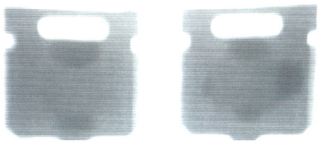
The Retronix testing team then went on to perform an X-ray test of these devices for a more in depth look and as per ERAI-STD-1010-B used for as reference found the following:


X-Ray Test by Retronix


XRF testing services


The test revealed that different results of die and the drain tab, all the parts on the same reel with the same datecodes should match under the X-Ray. As was mentioned earlier the labels showed all the devices to be lead free, and in order to authenticate this the X-ray test was performed which revealed otherwise.


IC tests by Retronix

The de-capsulation test was then done on the devices :


De-cap tests by Retronix
Figure : Images illustrate the topside (1) and the underside (2) of the sample device. Analysis suggests no evidence of attempted re-marking or re-packaging.


De-cap tests by Retronix

The images illustrate the package markings (1) , the entire die surface (2), and the die viewed at high magnification (3) and (4) , with no known good component or information from the datasheet, the die could not be confirmed as genuine. If the information on the datasheet is to be compared to the die, then Retronix believed that there would be more internal circuitry. Moreover no Die markings were found showing part number or the manufacturer.

Further checks revealed that the parts were already reported to the ERAI, where complaints such as parts smoking exploding on the boards were being reported.

Conclusion :

With all the evidence found Retronix believed the parts to be counterfeit components and not suitable for use on PCBs due to the electrical tests that were carried out and also with the information found on the ERAI website.

For more info -
Know more about Retronix | CLICK HERE |
Know more about our IC Testing services | CLICK HERE |
We welcome you to join our LinkedIn group | CLICK HERE |
Contact us : | CLICK HERE | info@retronix.com | sales@retronix.com

YouTube | LinkedIn | Twitter


Wednesday, 15 August 2012

Counterfeit Alert: August 2012

W83977ATG (WINBOND)


A customer sent Retronix's testing department a large number of these Winbond W83977ATG components and requested a visual inspection to determine their condition prior to use. The devices were bought as new and unused, but the evidence found by our testing team revealed that the parts were not compliant with standards set by IDEA-STD-1010B, Exhibit 46B Figure 12-79, Coplanarity Failures.

The parts arrived in non-moisture bags, meaning that if they were going to be used, they would need to be baked beforehand to remove any moisture. Some of the components which were visually inspected by the testing team at Retronix also showed signs of contamination. Upon opening the first bag of components, Retronix's testing team noticed obvious damage to the top left component.

Top tray of first bag of components - visible damage to pins on top left device
Top tray of first bag opened - visible damage to top left device.
Closer inspection of the devices uncovered contamination on the back of the component and damage to the pins. 

Left - contamination on back of device. Right - pin damage to device.
Although some of the components displayed differing pin 1 indents, this may have been because the batches had mixed datecodes. This theory would need to be verified by Winbond.

THE VERDICT

Due to the initial results of the visual inspection, as well as the more detailed results - which revealed pin damage and contamination - Retronix's testing team has ruled the components to be in "non-conforming condition."

CS5530AUCE (National Semiconductor)


Retronix's testing department were sent CS5530AUCE Geode components with the request that they be visually inspected before use, much like the above Winbond case. These components were also sold as new and unused. 

But as soon as the testing department opened the box containing the components, they knew that these components were not what they said on the label. As you can see, although these components are on the same tray and have the same markings, they have different pin 1 indents and different top side edges.

The visible differences in the shapes and pin indents of the devices.
Upon closer inspection, Retronix's testing team discovered that the components had several scratch marks on their surfaces and signs of liquid contamination on the solder spheres.

Evidence of contamination and reballing on Geode components.
Left - scratches and evidence of re-balling. Right - liquid contamination on spheres.
 The CS5530AUCE Geode components also displayed evidence of being re-balled.

THE VERDICT


The visual inspection revealed a number of anomalies and the more detailed results of the tests uncovered yet more unusual features in these components, such as scratches and sphere contamination. Accordingly, Retronix's testing team has ruled the components to be in "non-conforming condition."

MPC866PVR133A (FREESCALE)


A customer sent Retronix's testing team a batch of Freescale MPC866PVR133A components and requested a visual inspection to determine their condition prior to use. The devices were bought as new and unused.

When inspecting the packaging that the components had been delivered to Retronix's customer in, the testing team discovered that the label contained no manufacturer information or logo. 

Packaging label with missing information and logo
Packaging label is missing manufacturer's logo and information.

The components were then removed from the packaging and examined visually. This inspection uncovered a problem in the device's solder spheres - the spheres were scratched from underneath.

Devices show scratches beneath solder spheres
Visual inspection at Retronix uncovered scratches beneath solder spheres.
The only way that scratches beneath solder spheres can occur is if the solder spheres have been removed, meaning that it is very likely that this component had been re-balled - despite the fact that it was sold to our customer as "new and unused."

Further testing by Retronix also revealed that the device's solder spheres had evidence of contamination. Unfortunately, this was not the last of the component's flaws - the tests also showed that different sizes of solder sphere had been used to reball the device.

Solder sphere contamination and different sized solder spheres
Left - solder sphere contamination. Right - different sphere sizes used.
Solder sphere contamination is a tell-tale sign of a suspect device - as is different sized solder spheres.

THE VERDICT


Solder sphere contamination is a tell-tale sign of a suspect device - as is different sized solder spheres. This, coupled with the poor packaging which the components arrived in, has led Retronix's testing department to the conclusion that these components are "suspect counterfeit."

Worried about the authenticity of your components? Retronix can help

Monday, 28 May 2012

Combating Counterfeit

Evolution of the Counterfeit Trade


It's the three words every purchasing department dreads - "the grey market."

Counterfeit electronic components have been making their way to the UK market for some time now and it is estimated that 95% of these unsafe and unreliable parts are arriving from Asia - a recent study revealed that the counterfeit industry accounts for 8% of China's gross domestic profit. The Chinese counterfeit market is becoming more and more sophisticated and those involved are spending vast amounts of time and money on developing new ways to "fake" components.

Components being removed from PCBs in China. © Kevin Lee/Getty Images 
Most CEMs, franchised brokers and non-franchised brokers have had some experience of counterfeit components in the past. Using these parts can lead to massive financial liability as well as loss of reputation - it is believed that counterfeiting costs the semiconductor industry around $7.5 billion every year in lost revenue.

Combating Counterfeit Worldwide


There are ways to stop the spread of counterfeit components. 

Retronix has been at the forefront of the "combating counterfeit" initiative for a number of years and has recently invested significantly in state of the art testing equipment to help in the fight to stop counterfeit components reaching production lines all over the globe.

Ensuring Authenticity of Components


For Retronix's strategy to be effective, it is vital for the purchasing professionals, distributors and brokers to become part of the fight and use Retronix's services as the first line of defence. Send your grey market components to Retronix for testing before you purchase them and, provided that they pass our scrupulous testing process, you will be able to hand them over to your customer with our certificate of authenticity.

Retronix has also developed a revolutionary process that allows us to recover components safely from obsolete PCBs without the component die reaching reflow temperatures. Apart from the obvious cost savings, this also ensures that the history of the component is traceable - meaning that you have no doubts about their authenticity.

All components that are recovered using the Retronix method are tested, baked, packaged in tape and reel or waffle trays then vacuum sealed. Working to IDEA-STD-1010-B standard, Retronix offers various tests including:

  • Visual Inspection
  • Acid Wipe Test (examining component for changes to screen printing)
  • Curve Trace Test (powered and un-powered)
  • Key Functional Test
  • De-capsulation
  • Ionic Contamination Test
  • Solderability Test
  • X-Ray
  • XRF    

We know that careful and thorough testing combined with our unique component recovery process will help in the fight against counterfeiting and ensure that you provide your customers with authentic and reliable components. To find out more about what Retronix can offer, please visit our website or email one of our team members.