Thursday, 14 February 2013

Retronix Expands its Temperature Testing Capability


Retronix has taken delivery of a TPO412A Thermostream Temperature Forcing System in response to the increasing demand from customers to temperatures test ICs and other components. Capable of temperature extremes beyond -55°C to +125°C this nitrogen fed temperature forcing system allows Retronix to test ICs at commercial, industrial and military temperature ranges. Customers are asking Retronix to confirm certain product data sheet parameters at temperature and there is an increasing demand from OEM customers to characterise commercial grade ICs at wider temperature extremes. Retronix also plans to develop its extensive  Curve Trace Test capability to include test at temperature.

For more info about Retronix's | CLICK HERE |
We welcome you to join our LinkedIn group | CLICK HERE |


Tuesday, 5 February 2013

Retronix's Process Reduces OEM Production Costs for NPI by Over 50%


A division of a large telecoms company was responsible for the design of new products, specifically telecoms switches. These pcbs cost $15k each to make. This company would make perhaps 5 different versions, each one an improved version of the first, until they were satisfied with the design and released it to production.

Although each new version of the pcb is slightly different, most of the ICs, which make up 90% of the cost, are the same.

By sending the previous version of the pcb to Retronix for component recovery, the oem reduced the cost of their NPI production process by over 50%, without compromising quality, using Retronix’s IC rescue process.


Wednesday, 30 January 2013

Retronix Takes Delivery of its New High Capacity Laser Balling System


Retronix has taken delivery of its custom developed high capacity laser balling and reballing system. Developed in partnership with Retronix by a world renowned laser company, the new laser system will be capable of reballing multiple ICs over a wide work area. Retronix is finalising the development of the new laser system and will partner with existing customers to finalise its trialling and commissioning. The new laser represents a significant investment by Retronix and will reinforce its leadership in the market for balling and reballing ICs.


To know more about Retronix | CLICK HERE |
We welcome you to join our LinkedIn group | CLICK HERE |


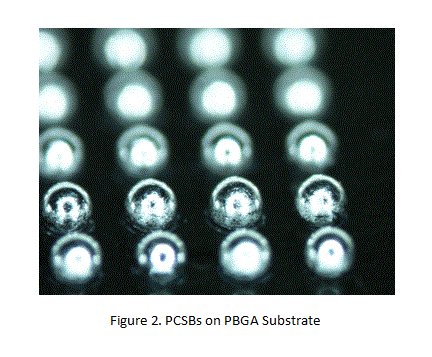
Retronix Successfully Trials Plastic Core Solder Balls

Plastic Core Solder Balls (PCSB) provide a method of ensuring stand-off height between an IC package and the substrate or PCB. Inside the SnAg sphere is a polymer core buffered by nickel  and copper layers.  Standard Pb free reflow profiles can be used to attach the PCSBs unlike the alternative method of High Melting Point (HMP) spheres.
For RF and microwave applications, PCSBs can provide a predictable and well controlled path length and inductance solution for package attachment to PCBs.

For more info CLICK HERE |
We welcome you to join our LinkedIn group | CLICK HERE |


Thursday, 20 December 2012

RoHS compliance: Case where the ICs did not have the correct alloy


A UK distributor had old stock of an IC that a customer wanted. However the stock was in leaded format, and the customer needed it RoHS (lead free).

The customer was suspicious of the distributor’s ability to do this but having limited options decided to proceed but he needed guarantees. Retronix fixed this issue as a guarantor by going through the process with the customer.

Alloy conversionThese are the actions that were implemented:
  • Chemical strip back of leaded device legs
  • Auto replating of RoHS compliant solder coating
  • XRF Test to ensure compliance

We then made an agreement deal whereby distributor/Retronix supplied the parts in batches, with the customer only paying when devices were successfully placed, eliminating the risk.

Retronix has invested in the latest automated retinning technology to ensure the highest levels of process repeatability and quality for alloy conversion or alloy refreshing.

For more info -
Know more about Retronix | CLICK HERE |
We welcome you to join our LinkedIn group | CLICK HERE |
Contact us : | CLICK HERE | info@retronix.com | sales@retronix.com

YouTube | LinkedIn | Twitter


Wednesday, 19 December 2012

RoHS Conversion in the Defence sector

Many defence systems rely on electronic parts that are no longer produced by the original manufacturer. That reliance is based, in part, on the long life cycles of these systems.


A UK defence company was buying BGAs via a distributor. Their requirement was a SnPb finish (leaded) and the BGAs that were purchased were Pb free.

rohs
Removing the lead free balls and replacing them with SnPb was an accepted process, but one which affected reliability via multiple reflows. 
Between us we managed to secure their allocation before the BGAs had balls placed on them, and they were subsequently finished on the Retronix BGA reballing laser machine.  By adopting the Retronix laser process we improved the reliability compared to the old process.  


For more info :
Know more about Retronix | CLICK HERE |

Know more about our services for the Defence Sector | CLICK HERE |
We welcome you to join our LinkedIn group | CLICK HERE |
Contact us : | CLICK HERE | info@retronix.com | sales@retronix.com

YouTube | LinkedIn | Twitter

Tuesday, 4 December 2012

Retronix Ltd. | Counterfeit Alert 2012 |

A customer sent approx. 5000 parts [BUK139-50DL] to check the authenticity of the components.  The customer who had procured these parts believed that the devices were originals and worked perfectly fine. He sent these parts to Retronix for Visual inspection, marking permanency testing, de-cap and a basic electrical test.

First a visual check of the label information was done and it showed on the labels attached on each reel, that the parts were lead free. Moving onto deeper visual checks on the components for the markings and the condition of the terminal told a different story. Retronix used the standard IDEA-STD-1010-B to compare the results.


Anti-Counterfeit IC Tests


Images 1 & 2 show faint indent markings and corner damage, these signs are evidence of remarking the components. Moreover there was no country of origin on the devices.

Image 3 shows further evidence that parts are remarked/sanded down as the device is uneven.


Visual Inspection by Retronix


Parts on the same reel showing different DRAIN tab features, also the top part of the device was in a very poor condition


IC tests by Retronix


Further to this, parts from the same reel showed different DRAIN tabs, the condition of the tab was poor, deep scratches and signs of damages to the edge as shown.


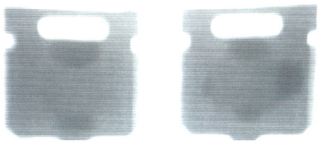
The Retronix testing team then went on to perform an X-ray test of these devices for a more in depth look and as per ERAI-STD-1010-B used for as reference found the following:


X-Ray Test by Retronix


XRF testing services


The test revealed that different results of die and the drain tab, all the parts on the same reel with the same datecodes should match under the X-Ray. As was mentioned earlier the labels showed all the devices to be lead free, and in order to authenticate this the X-ray test was performed which revealed otherwise.


IC tests by Retronix

The de-capsulation test was then done on the devices :


De-cap tests by Retronix
Figure : Images illustrate the topside (1) and the underside (2) of the sample device. Analysis suggests no evidence of attempted re-marking or re-packaging.


De-cap tests by Retronix

The images illustrate the package markings (1) , the entire die surface (2), and the die viewed at high magnification (3) and (4) , with no known good component or information from the datasheet, the die could not be confirmed as genuine. If the information on the datasheet is to be compared to the die, then Retronix believed that there would be more internal circuitry. Moreover no Die markings were found showing part number or the manufacturer.

Further checks revealed that the parts were already reported to the ERAI, where complaints such as parts smoking exploding on the boards were being reported.

Conclusion :

With all the evidence found Retronix believed the parts to be counterfeit components and not suitable for use on PCBs due to the electrical tests that were carried out and also with the information found on the ERAI website.

For more info -
Know more about Retronix | CLICK HERE |
Know more about our IC Testing services | CLICK HERE |
We welcome you to join our LinkedIn group | CLICK HERE |
Contact us : | CLICK HERE | info@retronix.com | sales@retronix.com

YouTube | LinkedIn | Twitter